
Making Great Parts
Ribs and Bosses
The design of moldable ribs and bosses is outlined on the following two pages. Once you understand the 66% rule the design of ribs is pretty much straight forward. Bosses however seem to be the #1 feature that must be redesigned for moldability.
RIBS ...................................................................................... BOSSES
These pages are not intended to be a comprehensive design guide to plastic rib and boss design issues. The aim here is simply to illustrate the most frequent MOLDABILITY violations that force redesign, tool modification, and delay product delivery.
RIBS
The design of ribs as it relates to plastic moldability is really quite simple.
THE DIVINE 66% RULE
The thickness of ribs should never exceed 66% of the nominal wall thickness.
If your ribs never exceed 50-66% of nominal wall thickness you will never have a problem with sink.
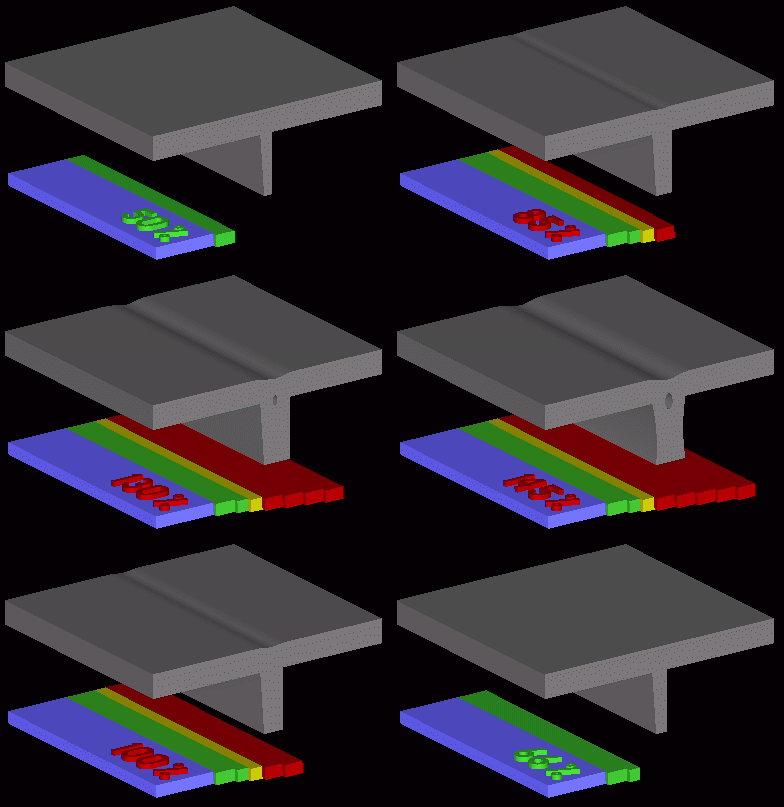
This demo illustrates the sink effects to be expected if you exceed the 66% rule.
Okay, rules are meant to be broken right? Sometimes you can get away with 66% to75% of nominal wall, but it is risky. Don't do it unless you absolutely have to. If you do, be certain that the area gets better than average plastic flow so that it can be packed out well without overpacking the rest of the part.
BOSSES
Bosses are cylindrical protrusions that are mounted to the nominal wall of the plastic part. Bosses usually serve as mounting or fastening points. When used as fastening points, self tapping screws or threaded metal inserts are inserted into the boss as an assembly or secondary operation. There are two primary moldability factors to consider when designing bosses.
-
Avoiding sink
-
Ejection feasibility
Roughly 90% of the bosses that have come to me over the years have required redesign. The poor part designer has been slaving over hoop strength, shear and insert fit calculations and thinks that the perfect boss has been designed, only to find that it can not be molded.
AVOIDING SINK
The image on the left demonstrates the ideal proportions for avoiding sink from a boss. The image on the right demonstrates how to get sink marks on your part.
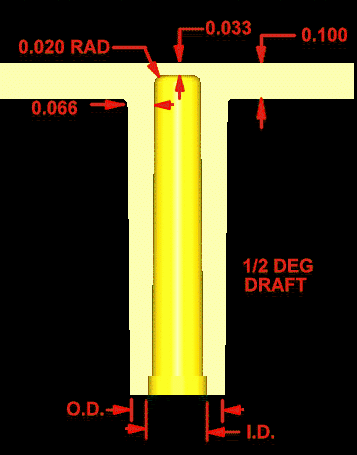
Note that the the boss wall is 66% of the nominal wall thickness. The core pin up the center penetrates 50-66% of the way through the nominal wall.
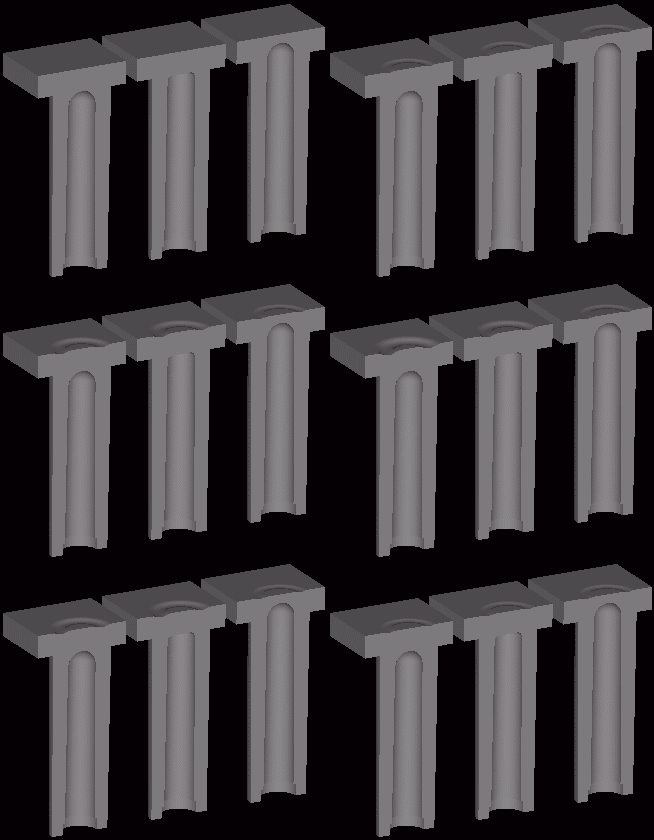
Note the circular sink marks created by the failure to properly core out the boss.
EJECTING BOSSES FROM THE MOLD
The ejection of bosses is accomplished with sleeves. The image below shows the basic function of sleeves.
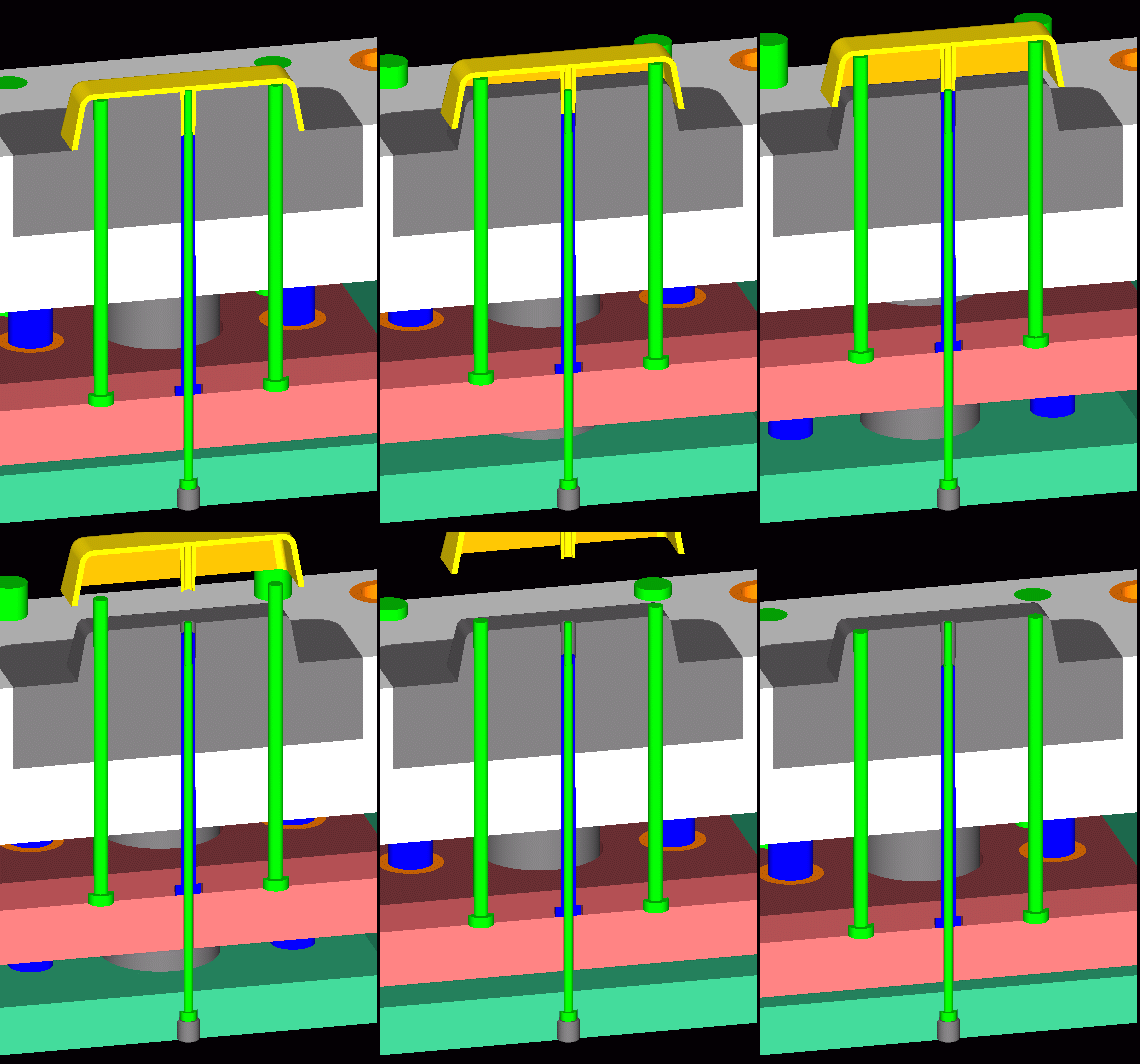
Click on the sleeve for a close up of the sleeve pushing the boss out of the core.
The boss is pushed out with a tubular ejector pin called a "sleeve". The sleeve is actuated by the ejector plates along with the rest of the ejector pins. The center of the boss is cored out by a fixed ejector pin that passes through the sleeve and anchors into the ejector box.
The Moldability issue enters with the availability of standard sleeve sizes. The availability of standard sleeve sizes limits the sizes of bosses that can be designed . Yes, custom sleeve sizes can be ordered to make the boss to any dimension you please. The problem is that if your custom sleeve ever breaks your mold will be dead on the shelf for up to two weeks while a new custom sleeve is made. Your average mold shop can not just drop everything and go make a sleeve. Very specialized equipment is required to create sleeves and custom ones must be ordered from one of a handful of companies. The cost of custom sleeves is significant.
The chart below shows the standard sleeve sizes available from DME. The exact same sizes are available from all standard parts manufacturers, Hasco, National, Progressive, etc.

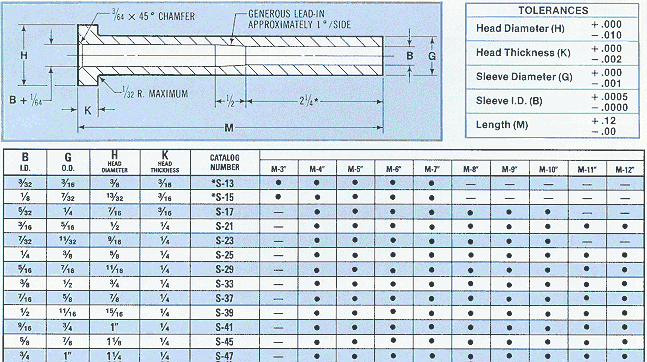
This DME chart is the key to good boss design. Dimension "B" is the I.D. and "G" is the O.D.
The rule is:
The boss I.D. must be

the closest sleeve I.D.
The boss O.D. must be

the the same sleeve O.D.
Example:
If the boss is to be pushed out with an S-17 sleeve;
The boss I.D. must be
0.156 -
The boss O.D. must be
0.250+
The big problem with all this is that metal insert manufacturers such as Dodge and Precision Fasteners ignore the above facts and their "Fastening Solutions for Plastics" manuals lead designers to design bosses that can't be made or that will cause sink.
Tip: If you must require custom sleeves get your toolmaker to order several extras, and keep track of them over the life span of the tool.
SLEEVE CLOSEUP
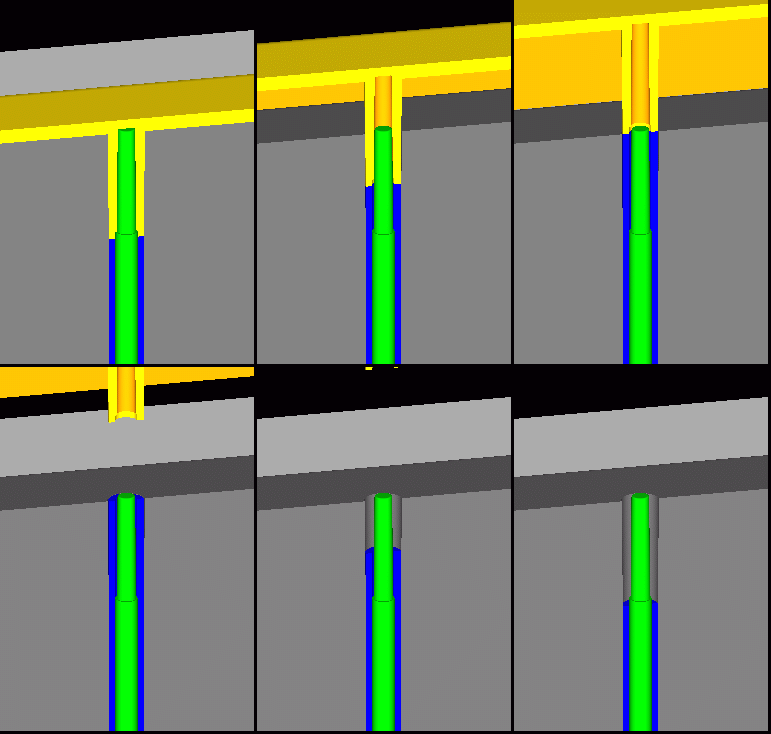
The sleeve pushes on the bottom rim of the boss.