Kevin McKinney · Silicon Valley
Parts that mold rightthe first time.
Thirty years of plastic part and injection mold design. I make parts that mold right the first time.
30+
Years designing molds
9
Seminar chapters
12
Fabrication projects
1:1
Direct with the designer
01 — Services
What I do
Injection molds designed
Complete tool design from your 3-D CAD model — slides, lifters, shutoffs, ejection and cooling.
Read moreCavity / core splits
Split geometry built to shrink, with parting lines and shutoff angles that hold up in steel.
Read moreMoldability consulting
Review your part early, before the geometry locks in costly tool actions and defects.
Read more02 — Moldability 101
A free seminar on designing plastic parts that molds can actually make
Design for Moldability is a virtual seminar featuring over 30 animations demonstrating injection mold actions and principles.
01 · Injection Mold Basics
Mold Standardization
MOLD BASES Mold base nomenclature The standardization and mass production of mold bases has resulted in naming conventions for basic mold parts that follow across all manufactured lines of moldbases and mold components.
02 · Injection Mold Basics
Undercuts and Side Actions
UNDERCUTS Undercuts are those portions of the part that can not be pulled in the line of draw. If an undercut were to be machined into a mold without a mechanism to releive it, the part would be destroyed upon mold openi
03 · Injection Mold Basics
Shutoff Angles
A shutoff angle has an entirely different reason for being than does a draft angle . A draft angle exists for purposes of part release, while a shutoff exists to prevent the two halves of the mold from crashing into one
04 · Injection Mold Basics
Draft Angles
The purpose of draft is to first provide release from the cavity side of the mold upon tool opening. Then upon ejection, draft allows instant release of the plastic part without dragging. If plastic parts have completely
05 · Injection Mold Basics
Parting Lines
The term parting line is a bit of a misnomer. Perhaps the term parting surface would be better. Many plastic part designers seem to have difficulty understanding that the parting line is not simply a vector that may be r
06 · Injection Mold Basics
Shrinkage
as it applies to injection molding is the contraction of the molded part as it cools after injection. Most of the part shrinkage occurs in the mold while the molds internal cooling systems are solidifying the thermoplast
07 · Injection Mold Basics
Steels
Following is a list of some of the most commonly used materials for mold construction. They include the following: P-20 Pre-hard steel. Rc 29-36. The most common tool steel used, it is a favorite among mold makers for it
08 · Making Great Parts
Flaws and Defects
Many flaws and defects can be avoided by using good part and tool design techniques. As a part designer it is a very good Idea to be aware of your options in tooling and to consider those while designing your part. For e
09 · Making Great Parts
Ribs and Bosses
The design of moldable ribs and bosses is outlined on the following two pages. Once you understand the 66% rule the design of ribs is pretty much straight forward. Bosses however seem to be the #1 feature that must be re
03 — Off the clock
CAD/CAM turned loose on wood, stone and iron
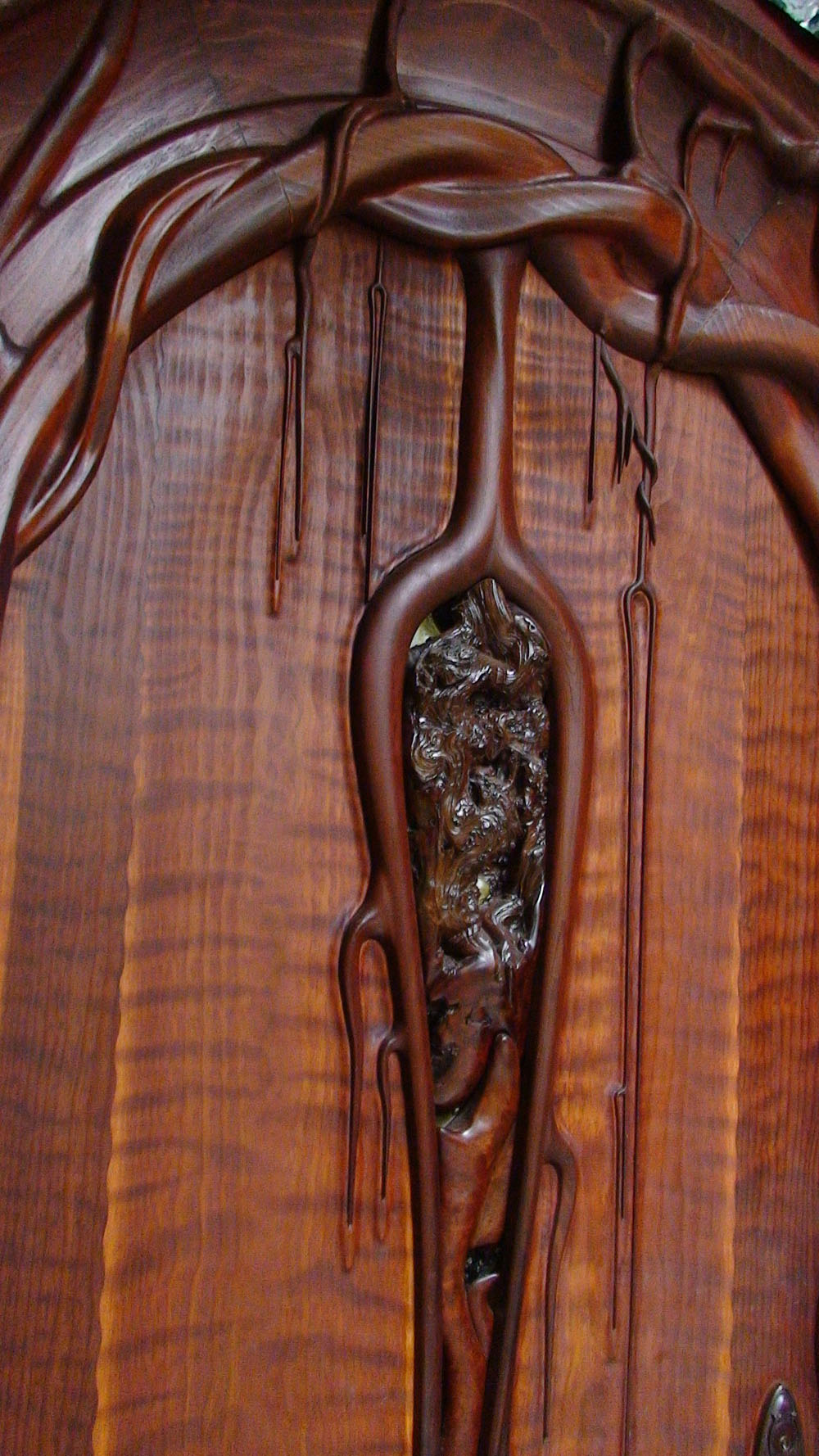
Tree Root Carved Door
Carved by computer from a 3-D CAD model

Involute Helix Stone Staircase
Built from a computer model
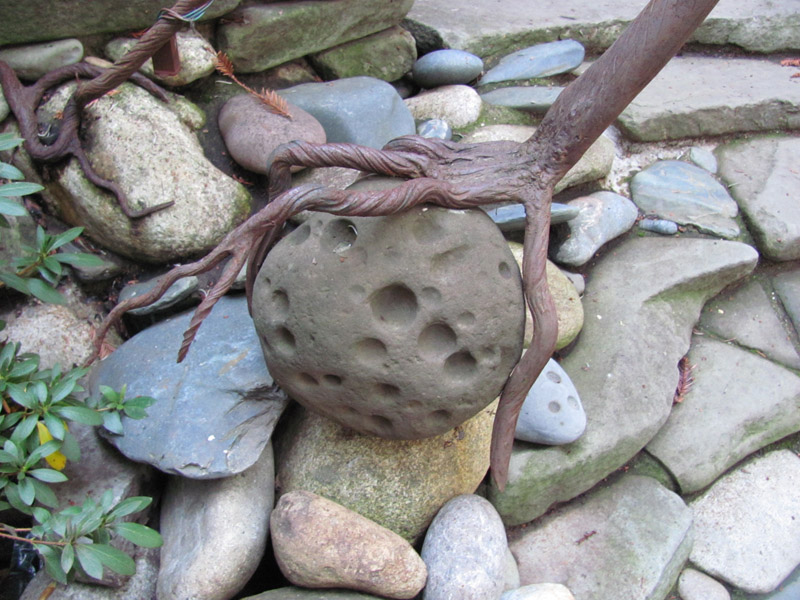
Hand Wrought Iron Roots Railing
Three years of heat, hydraulics and hammers
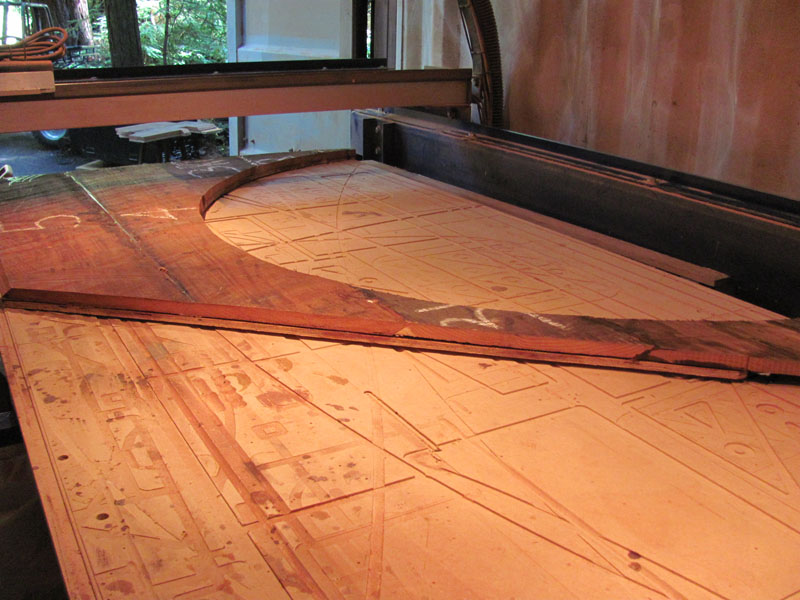
Reclaimed Redwood Siding
CNC carved from salvaged 1976 redwood

The Stump House
An experiment in materials and techniques that makes kids grin

Tree Root Wrapped Dining Room Table
Hand carved to my drawings by artists commissioned in Peru
Send me your model.
IGES, STEP, Parasolids, Cadkey or Unigraphics — let's talk about the tool.